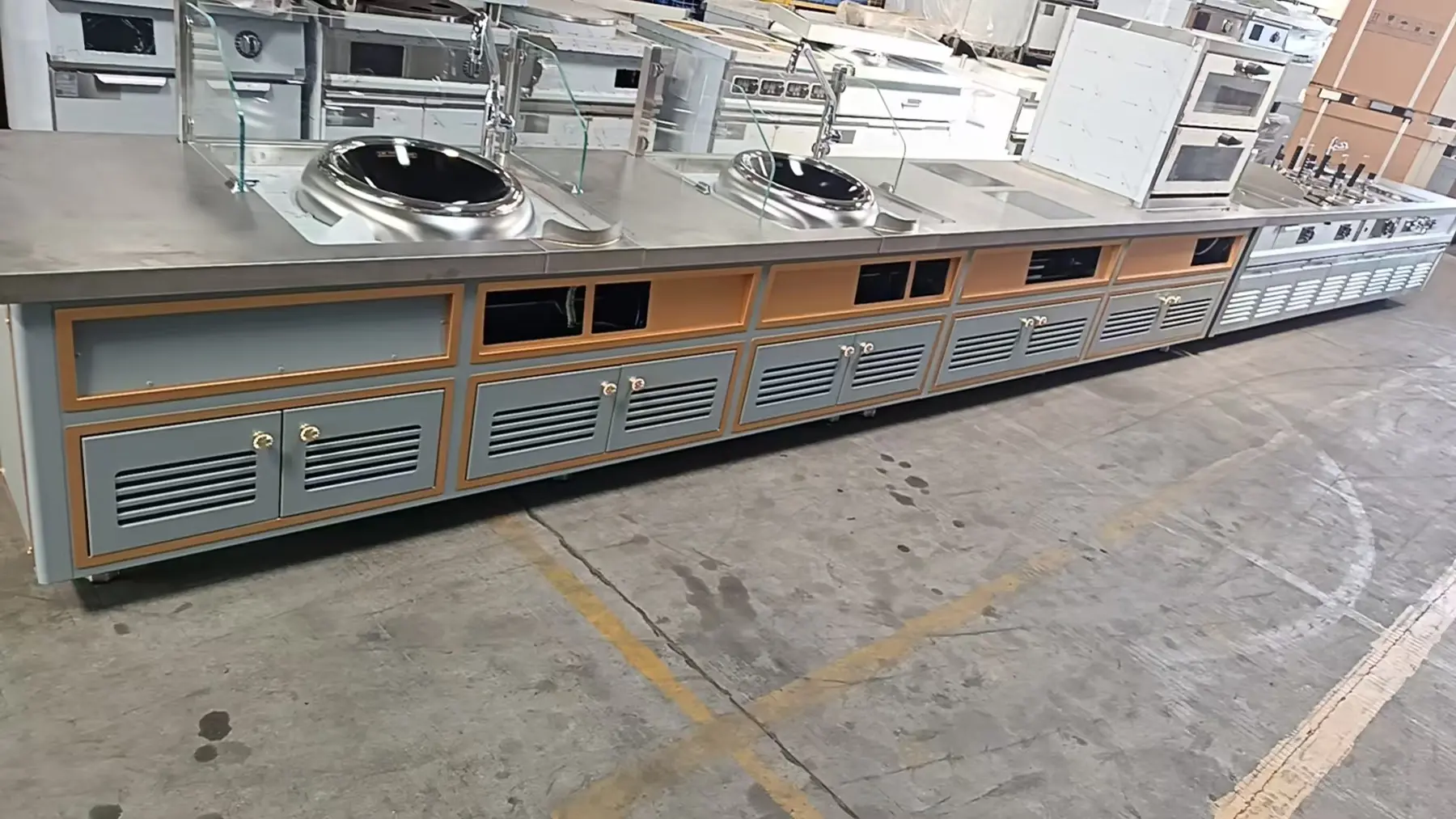
Begin with the cooking functions—not the parts
A mixed cooking island may bring together a griddle, fryer, overhead broiler, flat induction zones and a concave induction wok in one continuous suite. Each module performs a different cooking task and creates a different electrical, thermal and structural load.
The first engineering decision is therefore the functional map of the island: which processes are required, how operators move between them and how the modules share space, power and service access.
- Contact cooking on a griddle surface
- Controlled oil heating for frying
- Radiant overhead finishing or broiling
- Flat induction zones at different power levels
- A concave induction zone for wok cooking
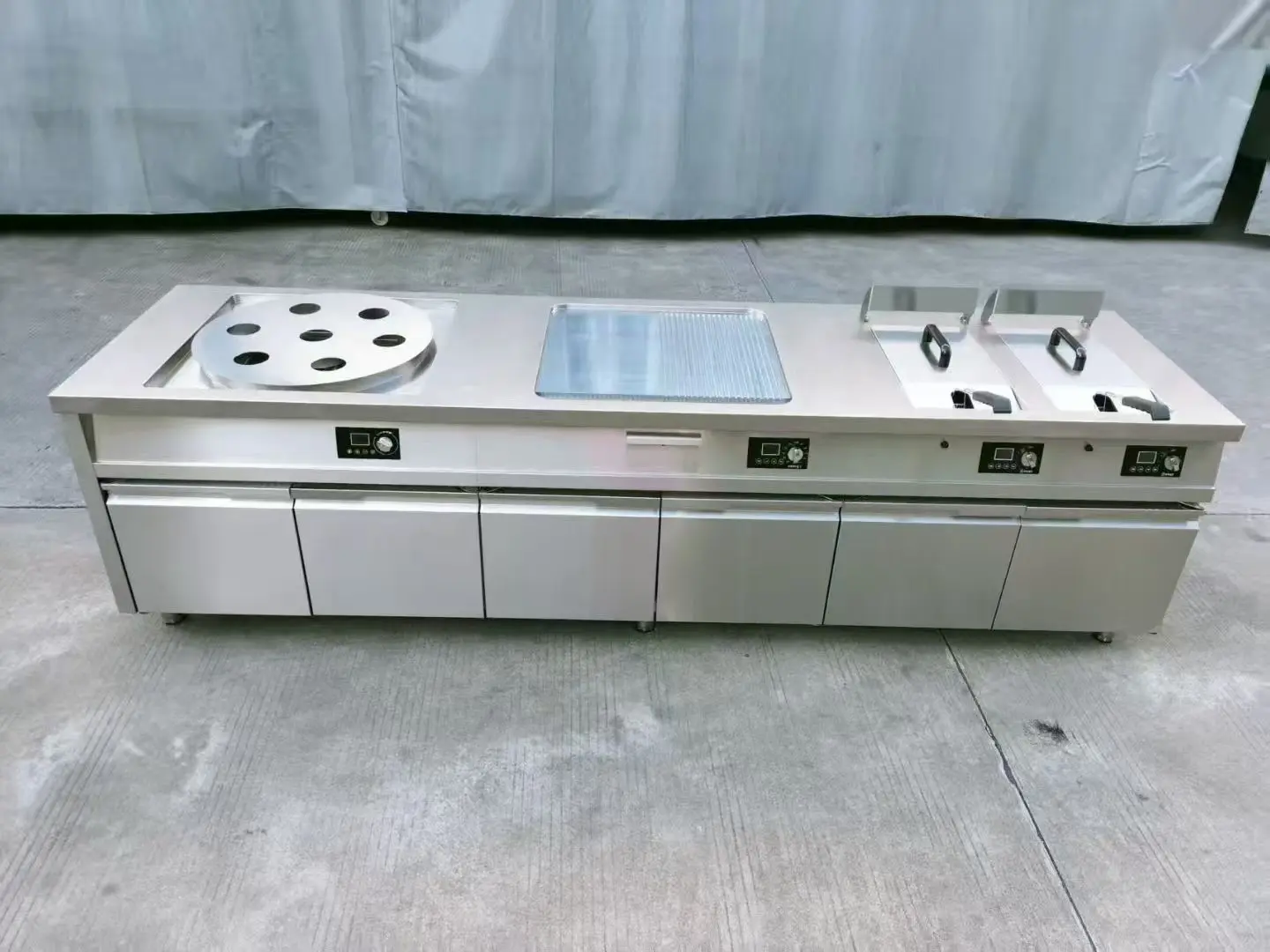
Different heating technologies need different control chains
Resistance-heated modules commonly combine heating elements with working thermostats, energy regulators or temperature-setting controls. Induction modules instead depend on a matched generator, coil, glass-ceramic interface, control switch and sensing logic.
These devices should not be treated as interchangeable components. Every cooking module needs a defined control chain that matches its heating principle, operating range and intended duty.
- Heating source matched to the application
- User control matched to the control device
- Sensor and feedback method defined by the module
- Electrical interfaces documented before fabrication
Protection is separate from normal temperature control
A working thermostat regulates the process. A safety limiter protects against an abnormal temperature condition. Keeping those functions distinct is especially important in oil-heating applications and other modules with stored thermal energy.
A system-delivery supplier maps the control and protection layers before parts are released, so the final assembler understands which devices operate the equipment and which devices form the safety boundary.
Cooling must be planned across the complete island
Induction generators and coils create a different cooling demand from resistance-heated griddles, fryers and broilers. Fans alone do not define a cooling solution; inlet position, exhaust path, cabinet partitions, ambient temperature and hot-air recirculation all affect the electronics.
In a mixed island, the airflow plan must keep cool air available to induction modules while limiting heat migration from neighboring cooking sections.
- Separate cool-air inlets from hot exhaust
- Prevent one module from heating another module’s intake air
- Allow space around generators, coils and fans
- Keep cooling components accessible for cleaning and service
Mechanical interfaces determine whether the system can be assembled
Flat induction zones, concave wok zones, griddle elements and fryer heaters do not share the same mounting geometry. Glass-ceramic size, coil relationship, control-panel position, equipment depth and maintenance access must be coordinated with the stainless-steel structure.
This is where a component list becomes an integration package: every functional group needs an agreed location, interface and service boundary before the customer completes the cabinet fabrication.
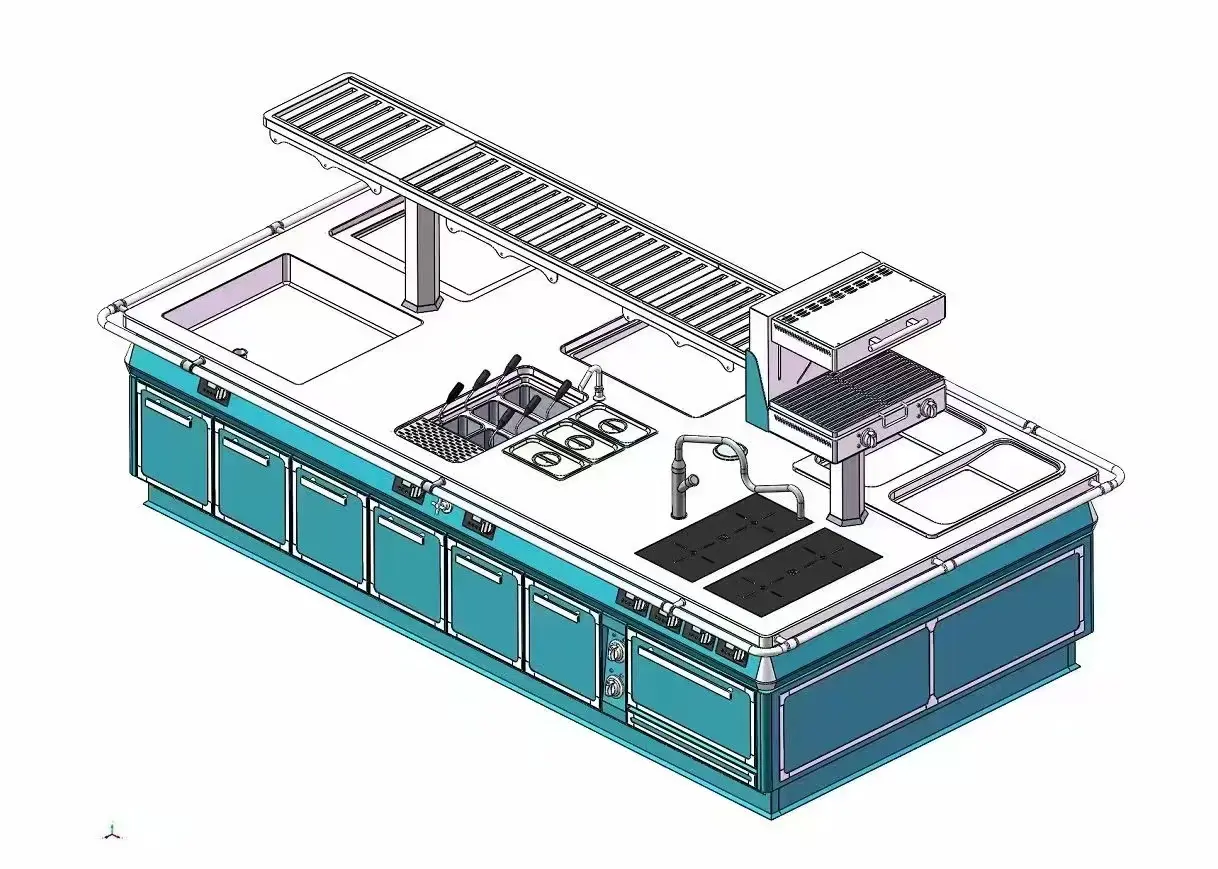
What professional system delivery should include
Professional delivery goes beyond supplying the visible components. The project should define the application-matched bill of materials, module boundaries, critical interfaces, control and protection concept, cooling requirements, identification method and validation plan.
InducParts supports manufacturers with a coordinated system package while the customer retains control of the local stainless-steel structure, product design, brand and market decisions. Detailed drawings, wiring, BOM quantities and assembly instructions remain controlled project documents rather than public website content.
- Application-matched system scope
- Controlled component and platform versions
- Interface and responsibility definition
- Assembly concept and validation checkpoints
- Spare-parts and long-term service planning
Common project questions
Is a commercial cooking island simply a set of appliances in one cabinet?
No. The cooking modules share structure, power, thermal conditions, controls and service access, so their interfaces must be planned as one system.
Does this guide provide detailed island assembly instructions?
No. It explains the system concept only. Project-specific BOMs, drawings, wiring and assembly instructions remain controlled technical documents.
This guide explains the integration concept, not an assembly procedure. Final specifications and technical files depend on the confirmed island layout, cooking functions, electrical supply and manufacturing boundary.